News Releases
Includes news releases posted directly to this site and links to news releases on the sites of our partners. If you are a partner, consider posting your relevant news releases directly to this site. Contact [email protected] for more information.
The Maine Chapter of Native Fish Coalition partnered with Downeast Salmon Federation, Atlantic Salmon Federation and Maine Department of Marine Resources to develop an informational sign pertaining to Maine’s federally endangered sea-run Atlantic salmon.
Cautionary Signage for Anglers
Stream Crossing Project Announcement
Federal agencies in Maine have collaborated on a programmatic Endangered Species Act section 7 consultation that will facilitate recovery of the endangered Atlantic salmon and promote healthy stream ecosystems. Poorly designed stream crossings have long been recognized as a problem for Atlantic salmon and other native aquatic organisms in Maine. While progress has certainly been made to address this issue on a variety of fronts, including outreach and education, more work remains to be done.
NOAA Fisheries designate critical habitat for Atlantic sturgeon
The critical habitat designation will require federal agencies to consult NOAA Fisheries if they operate or fund activities that may affect designated critical habitat in more than 3,968 miles of important coastal river habitat from Maine to Florida. Atlantic sturgeon was listed under the Endangered Species Act in 2012 and is comprised of the threatened Gulf of Maine distinct population segment and the endangered New York Bight, Chesapeake Bay, Carolina, and South Atlantic distinct population segments.
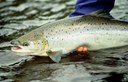
Endangered and Threatened Marine Species Recovery Grant Awarded to Penobscot Indian Nation
NOAA has awarded the Penobscot Indian Nation with continued funding for their Atlantic salmon management and outreach projects.

NOAA Announces Initiation of Atlantic Salmon Five-Year Status Review
Endangered and Threatened Species; Initiation of 5-Year Review for the Endangered Gulf of Maine Distinct Population Segment of Atlantic Salmon
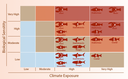
A Vulnerability Assessment of Fish and Invertebrates to Climate Change on the Northeast U.S. Continental Shelf
Atlantic salmon tops the list of species most vulnerable to climate change in Northeast
International Atlantic Salmon 2016 Assessment Report Available
2016 International Council for the Exploration of the Seas’ Working Group on North Atlantic Salmon Annual Report
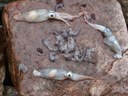
Changing trophic structure and energy dynamics in the Northwest Atlantic: implications for Atlantic salmon feeding at West Greenland
NMFS publishes new Atlantic salmon diet study in Marine Ecology Progress
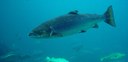
Salmon Smolts Survive the Dam but Die Downstream
New research reveals that dam passage can leave smolts with long-lasting injuries that make them vulnerable to predators far downstream.
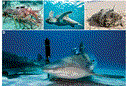
NOAA Scientists Collaborate to track Atlantic salmon smolts
A recent paper in Science highlights the recent advancements in hi-tech tracking tags and coast wide collaboration used by partners in the Ocean Tracking Network. NOAA Fisheries scientist John Kocik is a co-author on the paper describing the collaboration of the network for tracking Atlantic salmon smolt and other species movements. http://www.nefsc.noaa.gov/press_release/pr2015/scispot/ss1507/
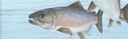
Greenlandic Fishery Continues to Catch Imperiled Atlantic Salmon
Press release from NOAA Fisheries summarizing the 2015 annual meeting of the North Atlantic Salmon Conservation Organization meeting in Goose Bay, Canada.
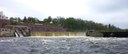
ICES Publishes NOAA Model to Predict Fish Population Response to Dams
NOAA Fisheries Scientists publish paper modeling the response of Atlantic salmon to dam removals on the Penobscot River, Maine, USA.
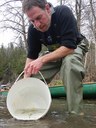
ASF Explores High Mortality in Early Part of Migration
St Andrews, N.B.— Top researchers with the Atlantic Salmon Federation (ASF) are trying to figure out why wild Atlantic salmon numbers are dropping dramatically once they leave their home rivers and head into saltwater. Jonathan Carr, ASF’s Director of Research and Environment, recently presented his latest scientific findings at the Atlantic Salmon Ecosystems Forum in Orono, Maine. Scientists from across North America gathered to exchange information regarding the latest research on wild Atlantic salmon and their habitat.
 News, Announcements and Media
 Help
Help